

Fayetteville Yard Waste Removal Services
Choose our Yard Waste Removal for fast, eco-friendly service that keeps your property spotless and your weekends stress-free.
Get a Free QuoteOur Fayetteville Junk Removal Services
Yard Waste Removal in Fayetteville, GA – Local Service Guide
Yard waste removal in Fayetteville, GA is essential for maintaining curb appeal and property health, especially in neighborhoods like The Villages at Lafayette Park and Lakemont. Seasonal cleanups are common after spring growth, fall leaf drop, or summer storms, with many residents scheduling pickups following landscaping projects or tree trimming. In areas with heavy tree coverage or near Whitewater Creek, regular removal helps prevent flooding and pest issues. Fayetteville’s local rules require proper sorting and disposal—grass clippings, branches, and leaves must be separated from household trash. For larger loads or storm debris, residents may need to coordinate with city services or hire local haulers. Commercial properties in downtown Fayetteville and along Glynn Street often require scheduled pickups to manage landscaping debris discreetly and efficiently. Specialty projects, such as estate cleanouts or construction debris removal, demand advance planning and may require permits or coordination with city officials. For more on local guidelines, visit the Fayetteville Public Works Department.
Key Considerations for Yard Waste Removal in Fayetteville
- Seasonal timing: spring/fall cleanups, post-storm debris
- Permit requirements for large or specialty loads
- Approved disposal channels and recycling options
- Access for trucks in wooded or flood-prone areas
- Volume limits and scheduling with city or private haulers
- Coordination for commercial, estate, or construction projects
Benefits of Yard Waste Removal in Fayetteville
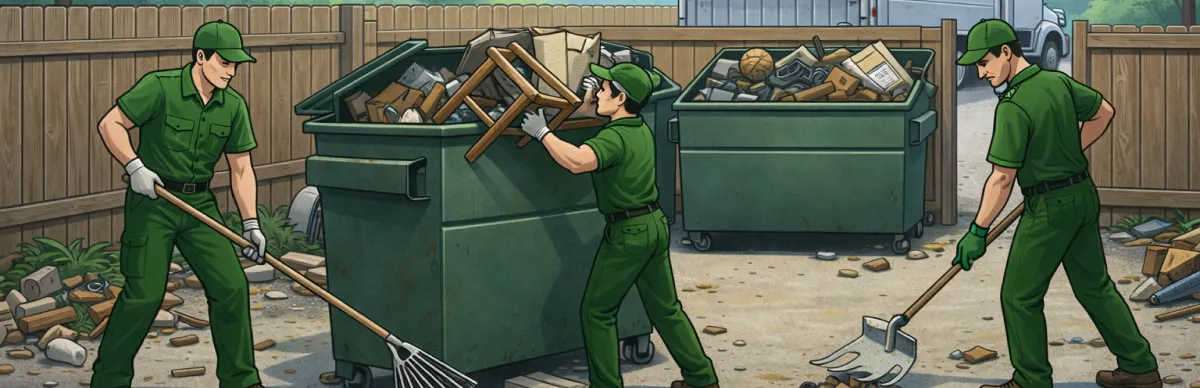
Fast Yard Waste Pickup
Eco-Friendly Disposal
Affordable Service Rates
Licensed and Insured Team
Flexible Scheduling Options
Comprehensive Cleanup Solutions
Coordinating Yard Waste Disposal with Fayetteville's Public Works Department
Fayetteville residents must follow municipal guidelines when disposing of yard waste such as leaves, grass clippings, branches, and brush. The City of Fayetteville's Public Works Department oversees sanitation services, including the collection and proper handling of organic debris generated from residential landscaping and property maintenance. Residents should be aware of the following requirements:
- Branches and limbs must be cut to manageable lengths, typically no longer than four feet, and bundled or stacked neatly at the curb
- Grass clippings and leaves should be placed in biodegradable bags or designated yard waste containers rather than mixed with household trash
- Stumps, root balls, and large logs may not qualify for standard curbside collection and may require separate hauling arrangements
- Dirt, rocks, and sod are generally excluded from yard waste pickup programs and must be transported to an approved disposal facility
Residents should contact Public Works directly to confirm current collection schedules and preparation requirements before placing materials curbside.
Fayetteville Public Works Department
240 Glynn Street South, Fayetteville, GA 30214
Phone: (770) 461-6029
Official Website: Fayetteville Public Works Department
Georgia's Solid Waste Management Act and Yard Debris Regulations
Georgia state law establishes the regulatory framework governing how yard waste and organic debris must be handled, transported, and disposed of throughout the state. The Georgia Comprehensive Solid Waste Management Act (O.C.G.A. § 12-8-20) requires all counties and municipalities to maintain solid waste management plans that address yard waste diversion and composting. Key state-level provisions include:
- Yard trimmings landfill ban: Georgia prohibits the disposal of yard trimmings—including leaves, brush, grass clippings, and similar vegetative material—in municipal solid waste landfills under O.C.G.A. § 12-8-40.2
- Composting facility standards: Yard waste must be directed to permitted composting facilities or mulching operations rather than standard landfill disposal
- Hauler requirements: Commercial yard waste haulers operating in Fayetteville must comply with both state solid waste transportation regulations and local business licensing requirements
- Illegal dumping penalties: Improper disposal of yard waste on public or private property may result in fines and code enforcement action
The Georgia Environmental Protection Division (EPD) administers these regulations and provides guidance on compliant disposal methods for residential and commercial generators.
Fayetteville Code Enforcement Standards for Property Maintenance and Yard Debris
Fayetteville's Code Enforcement division actively monitors properties for compliance with municipal ordinances related to yard waste accumulation, overgrown vegetation, and debris storage. Failure to properly manage yard waste on residential or commercial properties can result in violations and associated penalties. Property owners and tenants should understand the following standards:
- Accumulated yard debris left on properties beyond designated collection periods may trigger code enforcement action
- Overgrown lots and unmaintained vegetation are subject to municipal property maintenance standards; the city may issue notices requiring corrective action within a specified timeframe
- Burning yard waste within city limits is generally restricted or prohibited; residents should verify current burn ordinances before attempting open burning of leaves or brush
- Illegal dumping of yard waste in storm drains, waterways, or vacant lots violates both municipal code and stormwater protection regulations
Residents who receive a code violation notice should respond promptly and arrange for proper yard waste removal to avoid escalating fines.
Fayetteville Code Enforcement
240 Glynn Street South, Fayetteville, GA 30214
Phone: (770) 719-4168
Official Website: Fayetteville Code Enforcement
Stormwater Protection and Environmental Compliance for Yard Waste in Fayetteville
Improper yard waste disposal poses significant environmental risks, particularly to Fayetteville's stormwater infrastructure and local waterways. Leaves, grass clippings, and organic debris that enter storm drains can cause blockages, contribute to nutrient pollution, and degrade water quality in downstream ecosystems. Fayetteville's Engineering and Public Works departments coordinate stormwater management efforts that directly intersect with yard waste handling. Residents and landscaping contractors should observe these environmental compliance measures:
- Never blow or rake yard debris into storm drains, ditches, or streams—this violates stormwater pollution prevention requirements
- Composting on-site is encouraged as an environmentally responsible alternative that reduces the volume of material requiring collection or transport
- Mulching mowers can return grass clippings to the lawn, eliminating disposal needs entirely and improving soil health
- Erosion control: Large-scale land clearing or tree removal projects may require coordination with the Fayetteville Engineering Department to ensure compliance with grading and erosion control permits
The Georgia Forestry Commission and the Georgia Tree Council also provide resources on proper tree care, pruning practices, and sustainable landscape management that can reduce yard waste generation.
Fayetteville Engineering Department
240 Glynn Street South, Fayetteville, GA 30214
Phone: (770) 719-4167
Official Website: Fayetteville Engineering
Sorting and Separation Requirements for Fayetteville Yard Waste Materials
Proper sorting and separation of yard waste materials is essential for compliance with Georgia's landfill ban on yard trimmings and for ensuring efficient processing at composting and mulching facilities. Fayetteville residents and contractors must separate yard waste from other solid waste streams before collection or transport. The following sorting guidelines apply:
- Clean yard trimmings only: Leaves, grass, small branches, and brush should be free of plastic bags, wire, nails, and other contaminants
- Treated or painted wood (such as fence posts, deck boards, or landscape timbers) is classified as construction debris, not yard waste, and must be disposed of separately
- Invasive species or diseased plant material may require special handling to prevent spread; consult the Georgia Forestry Commission for guidance on disposal of quarantined plant species
- Mixed loads containing household trash, construction materials, or hazardous items alongside yard waste may be rejected at composting facilities and could incur contamination surcharges
Maintaining clean separation ensures materials can be composted or mulched rather than diverted to landfill, supporting Fayetteville's waste reduction objectives.
What Neighborhoods Do We Serve Throughout Fayetteville, GA?
- Downtown Fayetteville: The historic downtown core features older residential properties with mature tree canopies that generate significant seasonal leaf and branch debris. Narrow lot lines and on-street parking may require advance coordination for curbside yard waste staging.
- Whitewater Creek: This established subdivision contains large wooded lots with substantial pine straw, leaf litter, and periodic storm debris accumulation. Wide residential streets and accessible driveways facilitate efficient yard waste collection.
- The Gates at Limestone Creek: Newer construction with HOA-maintained common areas means residents should verify community covenants regarding yard waste placement at the curb and approved collection schedules before arranging removal.
- Lafayette Gardens: Single-family homes on moderately sized lots produce routine grass clippings and seasonal pruning debris. Standard curbside access is generally available throughout the neighborhood.
- Southside and Banks Road Corridor: Properties along this corridor include larger rural-residential parcels where land clearing, brush removal, and tree trimming generate higher volumes of yard waste that may exceed standard curbside collection limits.
- Summerhill and Bernhard Road Area: A mix of established and newer homes with varied landscaping generates diverse yard waste types, from ornamental pruning to large hardwood limb removal following seasonal storms.